OUR PROJECT IN NICARAGUA
A NEW FOREST OF 500.000 TREES IS FLOURISHING. ON TOP OF THAT 200.000 NATIVE TREES HAVE ALREADY BEEN PLANTED ACROSS MULTIPLE SITES.
Our next milestone: a major expansion of our native plant nursery to enable the production and planting of 100,000 native trees every year.
We are continuously expanding and setting new goals to leave a positive green footprint for generations to come.
WHY NICARAGUA?
GROWTH
PRICE
NORTH SOUTH
North-South collaboration is crucial for achieving global goals and aims to achieve an ecological and social-economic benefit
HISTORY
Due to some of the founders’ history with Nicaragua, good relationships and cooperation with motivated people have already been established
LOCATION
OUR TREE PLANTING SITE
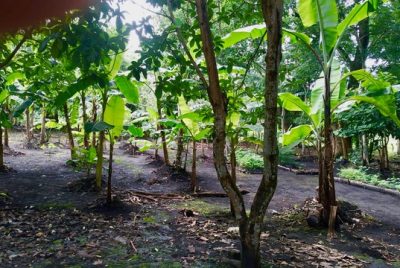
The area we are restoring in Nicaragua covers approximately 250 manzanas (170 hectares) of largely deforested land, where cattle ranching has been the primary cause of deforestation.
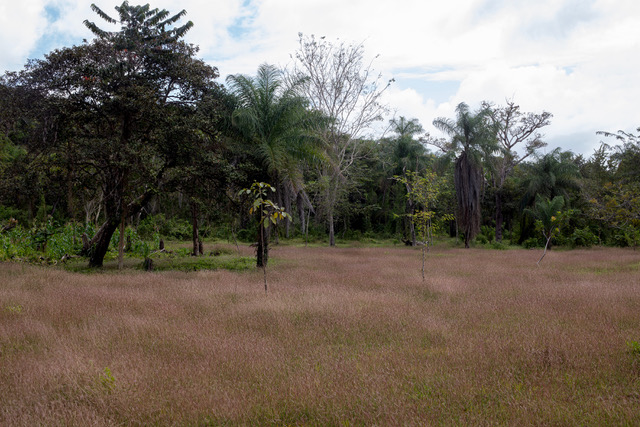
Since the beginning of our work, a new forest of more than 500,000 native trees is taking shape and 200.000 native trees are now thriving across this landscape, helping to rebuild the ecosystem and support local biodiversity.
WHAT WE DO
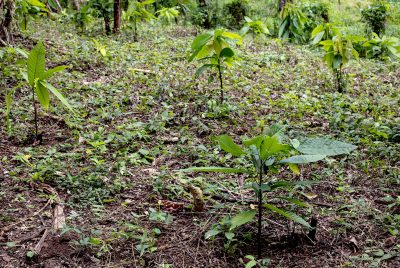
We plant a wide variety of indigenous trees
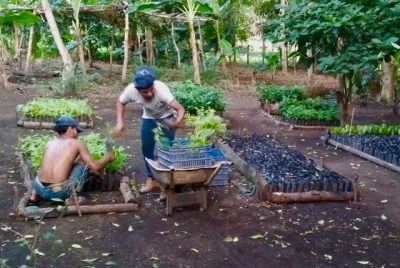
Our tree nursery was established in 2021, and since then, we’ve planted a rich diversity of native tree species in previously deforested areas. Wherever possible, we have replaced non-native and invasive trees with species that naturally belong to the ecosystem.
Many of the trees we plant are fruit-bearing, adding nutritional value to local diets. We’ve also established living fences — natural, sustainable boundaries made from native trees — which help protect the land and support biodiversity.
In addition to planting, we actively encourage natural regeneration, allowing wild plantlets to sprout and grow spontaneously, strengthening the resilience of the restored forest.
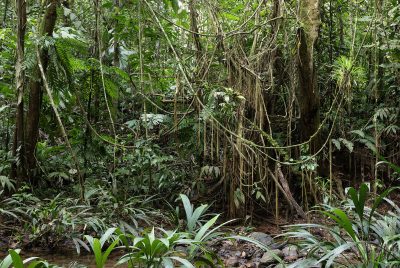
We protect forests and ecosystems
Within the project area lies a small but vital existing forest of around 5 hectares, which plays a crucial role in sustaining the village’s groundwater supply.
By protecting and expanding this forest, we help safeguard the community’s access to water — a lifeline that becomes even more critical during the increasingly prolonged periods of extreme drought.
Healthy forests not only support biodiversity and climate resilience, but also ensure that local ecosystems can continue to provide essential resources for generations to come.

We create habitats for wildlife
Massive deforestation in the region has devastated native wildlife habitats. But nature is beginning to return.
As our reforested areas mature, animals are re-establishing themselves in the new ecosystem. Small populations of monkeys, deers and numerous bird species are not only surviving—they’re thriving and expanding. In a particularly hopeful sign, also sloths were recently spotted in the newly created forest—a powerful reminder that regeneration is possible.
By planting trees, we’re not just restoring landscapes—we’re giving wildlife a place to call home again.
To plant more trees while increasing productivity and raising the standard of living in an ecologically sustainable way, we apply 4 types of agroforestry systems.
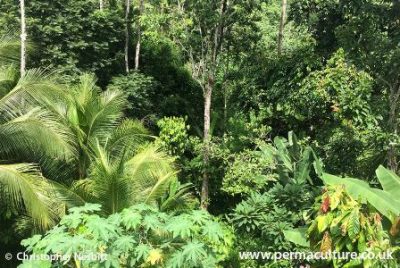
Agroforestry in three layers
We implement a three-layer agroforestry system, planting a diverse mix of native trees and shrubs. This includes both high-value and non-commercial timber species, as well as fruit-, berry-, and herb-producing plants that offer high nutritional value.
This method replicates natural forest structures, enhancing biodiversity, improving soil fertility, and significantly reducing erosion—all while creating resilient and productive landscapes.
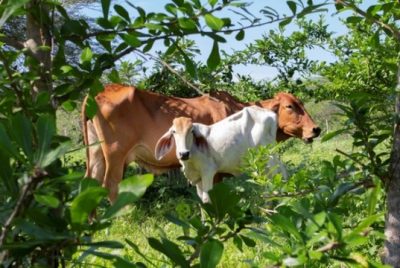
Silvopastoral system
Trees are integrated into our pastures through a silvopastoral system, where they play a vital role in farm productivity:
- Provide shade and fodder for cattle
- Improve pasture quality with half-shaded grasses rich in nutrients
- Enhance soil structure and carbon capture
We focus on tree species whose foliage is edible for livestock, ensuring sustainable feed while restoring degraded grazing land.
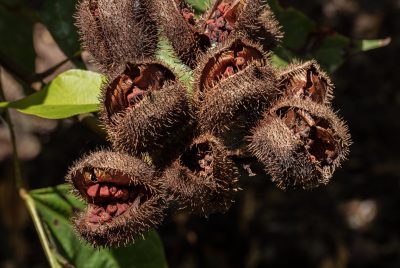
Orchard around the patios
Around homes and patios, we plant multi-purpose trees:
- Fruit trees for food security
- Timber and firewood species for future use
- Carefully planned and monitored to maintain diversity
These trees not only provide essential resources but also turn tree planting into a profitable long-term investment for rural families.
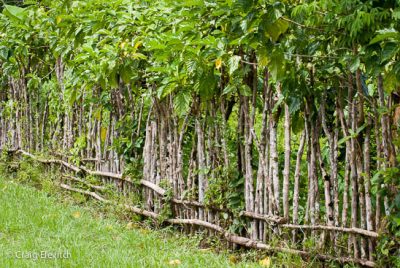
Living fences
Living fences offer a sustainable, cost-effective alternative to traditional fencing:
- Require only an initial investment in seeds and saplings
- Act as natural windbreaks that protect crops and livestock
- Serve as wildlife corridors and enhance on-farm biodiversity
- Last for decades, offering enduring environmental and economic value
These green borders are a lifelong investment in the planet—and in resilient farming.
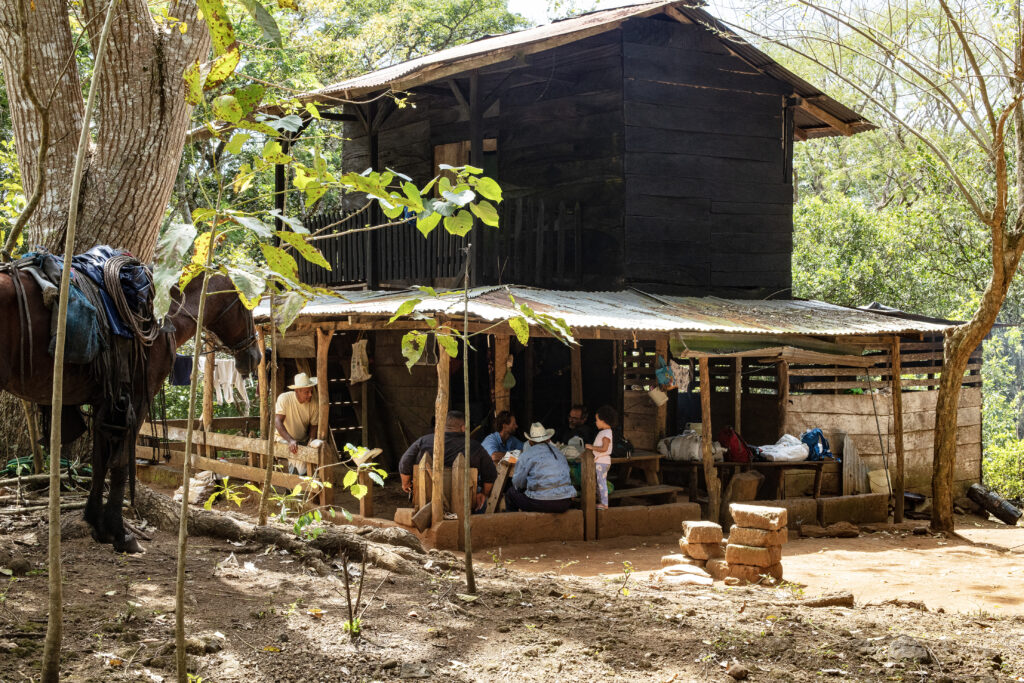
OUR LOCAL TEAM
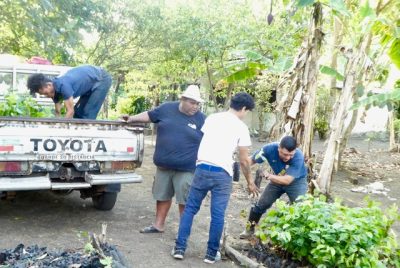
Our reforestation project is driven by a dedicated team of local staff. The core team includes a forest ranger, a site supervisor who coordinates all on-the-ground activities, and an administrator who provides regular project updates and reports.
In addition, we work with seasonal laborers who assist with seed planting, seedling care, and tree planting.
The bigger the project grows, the more meaningful employment we can provide to local families — creating not only environmental impact, but also lasting social value in the region.
WE BELIEVE IN TRANSFER OF KNOWLEDGE AND EDUCATION TO BUILD A GREEN FUTURE FOR GENERATIONS TO COME!
COLLABORATION
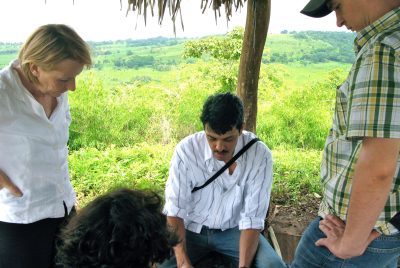
Strong collaboration with local communities and organisations is essential to the long-term success of our project.
We work hand-in-hand with local partners who understand the region’s challenges and opportunities. By building trust, sharing knowledge, and aligning our goals, we ensure that reforestation efforts are rooted in local support — and can thrive for generations to come.
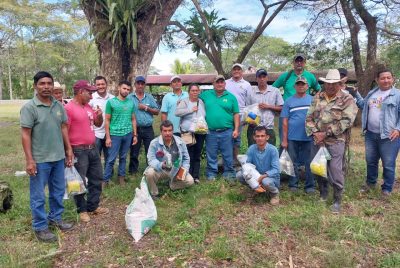
ENCOURAGING
Tree Planting
We are on a mission to plant thousands of native trees and inspire local communities to do the same. This region faces severe poverty, and deforestation caused primarily by cattle ranching has taken a heavy toll on the land. By expanding our project, we not only restore the environment but also create jobs and income for struggling families. We even provide saplings free of charge to those who cannot afford to nurture trees themselves — because everyone deserves a chance to help heal the planet.
ENCOURAGING
Trainings
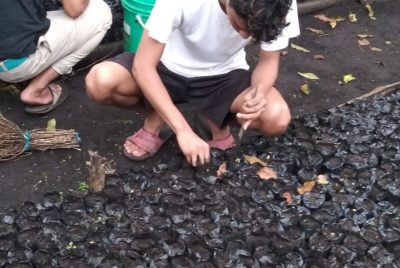
Through partnerships with local organisations, our project has become a model for sustainable reforestation. We offer hands-on training at our nursery and during planting events, teaching people how to grow and care for native trees, and explaining why this work matters for the health of their land and future generations.
ENCOURAGING
Experiences
We believe the future belongs to today’s youth. That’s why we work closely with local schools to educate children and young people about the importance of trees, from seed to sapling to forest. At TreeGenerations, they gain practical experience that connects them deeply to their environment and inspires lifelong stewardship.
NEAR FUTURE, next GOAL: plant 100.000 trees a year
Much has already been achieved in a short period of time—but there’s much more to be done.
Our next step is to scale up and plant even more trees across the region.
In Nicaragua, approximately 70% of smallholder family farmers live in poverty. While many are aware of the crucial role trees play in adapting to climate change, they often lack the resources to purchase seeds or care for young saplings until they can be planted.
To address this, we work with local partners to develop a sustainable and scalable solution. Through these joint efforts, TreeGenerations grows 50,000 native trees twice a year at our nursery, focusing on diverse, climate-resilient species. Together with our partners, we distribute the saplings to smallholder farmers and support the planting process to ensure long-term success and ecological impact.
To reach our goal of planting 100,000 trees annually, we are seeking partners who can help provide the resources needed to expand this work. Your support can directly empower farmers, restore ecosystems, and build climate resilience for future generations.